
Systemic prison emergency in the pays des droits de l'Homme?
- Matteo Zamboni
- May 8
- 5 min read
Updated: May 22
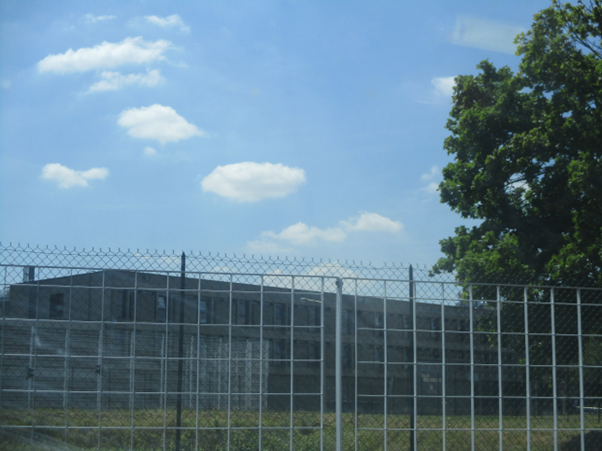
With a decision of 22 April 2026, the Amsterdam District Court decided to stay surrender to France due to poor conditions of detention
According to a circular issued by the prison administration on 17 May 1988, the French prison system affords detainees with generous living space. But this is only true on paper. In practice, France is facing a serious prison overcrowding crisis, which is at once structural and worsening.
This has long been denounced by international monitoring bodies, such as the European Committee for the Prevention of Torture (CPT); national human rights institutions, like the Contrôleur général des lieux de privation de liberté (CGLPL), the Commission nationale consultative des droits de l’homme (CNCDH), the Défendeur des droits (DDD); and finally by the European Court of Human Rights (ECtHR). Now, these findings are beginning to affect surrender to France of individuals sought pursuant to European Arrest Warrants (EAWs).
As a matter of fact, with a decision of 22 April 2026, the Amsterdam District Court (Rechtbank) decided to stay surrender to France pursuant to a EAW due to the “individual risk that the person sought will suffer a violation of his fundamental rights due to the conditions of detention”.
The precedents from 2025
This decision is not isolated. Indeed, the findings of 2026 draw upon two precedents of 2025 in which the same District Court had stayed the execution of two EAWs issued by France by relying on statistics from the French Ministry of Justice (updated to May 2025) showing that “the problem of overcrowding […] appears to occur on a structural scale […] in [remand] detention centres” which accommodate “both suspects and persons serving a (remaining) sentence of no more than two years”.In addition, the Amsterdam District Court noted that “the picture that emerges from the reports published over the years by the European Committee for the Prevention of Torture and Inhuman or Degrading Treatment or Punishment” (see here the reports issued in 2021).
Moving to the part of the test concerning individualised risk, as per the case law of the Court of Justice of the European Unione (with specific reference, from the Dutch judges, to Judgment of 15 October 2019 in case C -128/18, Dorobantu), the District Court “proceed[ed] to examine specifically and carefully whether, in the circumstances of the case, there are substantial and fact-based grounds for believing that, following his surrender to France, the person sought will face a real risk of being subjected to inhuman or degrading treatment within the meaning of that article”. In so doing, and notwithstanding two requests for information already submitted by the Prosecutor, the Court asked additional information to the French judicial authority and stayed the execution of the EAW.
The decision of 26 April 2026
In the decision of 22 April 2026, the Amsterdam District Court moved a step forward.
The case was concerned with an EAW issued by the investigating judge at the Bobigny Court of Justice in respect of an individual suspected of belonging to a criminal organisation undertaking the offences of kidnapping, unlawful deprivation of liberty and hostage taking.
In an interlocutory decision, the District Court recalled that the precedents of 2025 “recognised a general risk of a breach of fundamental rights for persons detained in a men’s wing of a remand centre in France” and highlighted the “structural problem of overcrowding, which creates a real risk that detainees will be placed in a shared cell with a personal living space of less than 3 sq. m.”, especially in centres for detention on remand, that — in practice — accommodate not only “suspects” but also “persons serving a (remaining) sentence of no more than two years”.
This prompted the Prosecutor to seek additional information and specific guarantees from the French authorities. The reply, however, was far from satisfactory. Indeed, the Public Prosecutor of Bobigny:
Confirmed that, upon surrender, the requested person would be detained in the reman centre of the prison of Fleury Merogis which, at the time, recorded a staggering overcrowding rate of 174.3%.
Stated that, upon conviction, the actual place of detention would be identified following a “procedure called orientation, which may result in [the] transfer to another prison”.
Underlined the specific method of calculating available places in the French prison system by arguing that “Due to the methodological difference between French regulations and the standards derived from European case law regarding the calculation of cell floor space and the personal space available to each prisoner, it is not possible for the French authorities to provide the guarantees requested regarding the minimum surface area available”.
The Dutch Prosecutor asked for further information, but to no avail. Therefore, the Prosecutor “requested […] that […] the case be adjourned […] as the information currently provided is insufficient to dispel the established general and real risk of inhuman or degrading treatment for the person sought”.
The argument was granted by the District Court which found “that the additional information provided by the French authorities on 5 March 2026 and 20 March 2026 had not removed the established general danger to the person sought”. More specifically, the Dutch court noted that “due to the method they use to calculate the floor area of cells and the personal living space of detainees, the French authorities are unable to provide concrete guarantees regarding the exact number of square metres that the requested person will have at their disposal in a shared cell following surrender”. Yet, “it is not for the court itself to make a calculation”.
As such, the District Court established that the “individual risk that the person sought will suffer a violation of his fundamental rights due to the conditions of detention at FleuryMérogis prison”, and therefore “stay[ed] [its] decision” until and unless the risk is removed.
Future prospects
The case will resume between 21 May and 30 May 2026. However, it is difficult to believe that the RP will be surrendered to France. Quite the contrary, when the case resumes the Amsterdam District Court will be able to consider other decisions and materials pointing to the continuing worsening of the situation.
In the first place, the decision of the District Court does not consider the judgment issued in 2020 by the ECtHR in the case of J.M.B. v. France which found a systemic violation of Article 3 of the European Convention on Human Rights holding that twenty-seven applicants suffered inhuman and/or degrading treatment due to the systemic lack of the minimum living space of 3 sq. m. in the remand centres of Nîmes, Nice, and Fresnes. The judgment is 5 years old and considers the situation of the French prison system between 2013 and 2016, however, the District Court of Amsterdam may want to highlight the fact that:
The ECtHR replicated the same findings in the more recent cases of B.M. and Others (2023) and R.M. (15 January 2026).
The Committee of Ministers of the Council of Europe, which is tasked with the supervision of the execution of J.M.B., including as regards the general measures indicated by the ECtHR under Article 46 of the European Convention of Human Rights, is very critical of the measures enacted by the French Government: in March 2024, it denounced “a worsening of the situation”, while in June 2025 it “reiterated [its] deep concern” and decried “a continued deterioration of the situation, especially in remand centres” as well as “a steady increase in the prison population”.
Secondly, the District Court of Amsterdam will be able to rely on the latest report of the CPT, which was issued on 22 January 2026, which is harsh, to say the least. Indeed, the CPT stated that “the increase in prison overcrowding is particularly alarming”, noted that “some of its […] long-standing […] recommendations […] have still not been implemented” and even threatened “to consider initiating proceedings that could lead to a public declaration under Article 10, paragraph 2, of the [European] Convention [for the Prevention of Torture”, which sanctions the failure and/or refuse to cooperate.


Comments